
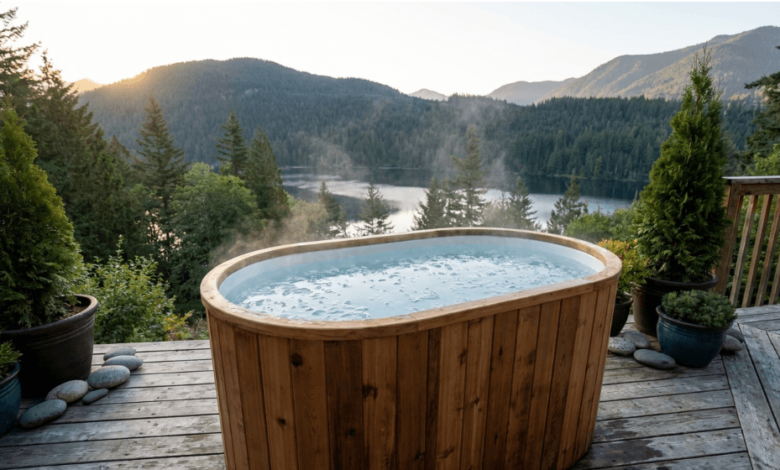
Most people start cold plunging with one of four setups: an inflatable ice tub, a stock tank cooled with bagged ice, a standalone unit with a built-in chiller, or a permanently plumbed plunge pool. Cost ranges from under $200 for an inflatable tub to well over $10,000 for a built-in installation, and the right choice mostly comes down to how often the tank will actually get used.
Inflatable Tubs vs Everything Else
An inflatable tub is the lowest-risk way to find out if cold plunging is something you will keep doing. It sets up in minutes, packs away for winter storage or a move, and costs a fraction of a permanent unit. The tradeoff is durability and convenience: most rely entirely on bagged or homemade ice, hold less water than a rigid tank, and the vinyl liners are more prone to punctures over a few seasons of regular use. Anyone unsure whether they will use it past the first month should start here rather than committing to a bigger purchase.
Stock Tanks vs Purpose-Built Tanks
A galvanized stock tank from a farm supply store, fitted with a foam cover, is a genuinely popular budget route and holds up better than an inflatable over years of use. It lacks built-in filtration or insulation, so water needs manual treatment and more frequent full drains than a purpose-built plunge tank, which usually ships with an integrated pump, filter cartridge, and sometimes ozone sanitation. Purpose-built tanks cost more upfront but need less hands-on maintenance week to week, which matters more the longer someone plans to keep the routine going.
Ice-Only vs Chiller-Equipped
Ice-only setups avoid the chiller’s upfront cost, typically $2,000 to $4,000 of a standalone unit’s total price, but require a steady supply of ice and regular water changes. A chiller holds a set temperature automatically, usually somewhere in the high 30s to mid 50s Fahrenheit depending on preference, and removes the ice-run entirely. For someone plunging daily, the time saved on ice runs alone tends to justify the extra cost within a year or two; for weekend-only use, ice remains a reasonable and much cheaper option.
Standalone Units vs Built-In Plunge Pools
A standalone chiller unit is freestanding, ships mostly assembled, and can be relocated if you move or rearrange a space. A built-in plunge pool is excavated and plumbed like a small pool, costs considerably more, often requires permits and an electrician for a dedicated circuit, and cannot be taken with you. It does offer a cleaner finished look and can be sized larger than most standalone tanks. Once you know roughly what tank size and chiller output fit the space, comparing options side by side is easier through one catalog than piecing together specs from several brand sites; the team at SweatDecks lists tank capacity, chiller wattage, and filtration details together on each listing, which helps narrow the field before you commit to a price point.
What Each Setup Actually Costs to Run
The sticker price is only the starting number. An inflatable tub’s ongoing ice budget can run $20 to $40 a week for a regular user, which adds up to several hundred dollars a year on top of the initial purchase. A stock tank with manual water treatment needs chemicals or more frequent full drains, a smaller but still real recurring cost, plus the labor of hauling and refilling water by hand. A chiller-equipped unit has the highest upfront cost but the lowest ongoing effort, with electricity being the main recurring expense, typically a modest addition to a monthly power bill depending on climate and how often the unit cycles. A built-in plunge pool carries the highest costs on both ends: installation, permitting, and then years of electricity and filter maintenance similar to a small pool. Mapping out year-one cost against year-three cost for each option, rather than looking only at the purchase price, changes the calculation for anyone planning to keep the habit long term.
What the Evidence Actually Supports
Interest in cold plunging has outpaced the research behind it in places, so it helps to know what the current evidence actually says before buying anything. A 2025 systematic review and meta-analysis in PLoS One looked broadly at health and wellbeing outcomes tied to cold-water immersion and found generally positive but modest associations, not dramatic ones. Research on post-exercise cold-water immersion specifically has produced mixed results on recovery and performance, and a Cochrane review of cold-water immersion for muscle soreness found some benefit for soreness itself but limited evidence for broader recovery claims. None of this is a reason to skip a plunge; it is a reason to expect steady, modest benefits from regular use rather than a single transformative session.
Picking a Starting Point
For most beginners, the sensible order is: try an inflatable tub or a stock tank first, use it consistently for a season, then decide whether the convenience of a chiller and built-in filtration is worth the jump. Skipping straight to a large built-in installation before knowing whether the habit sticks is the most common expensive mistake in this category. Budget, available space, and how many people in the household will actually use it regularly should drive the decision more than which setup looks best in photos.
It also helps to think about where the tank will live before deciding on a size. A patio corner, a garage bay, or a mudroom with a floor drain all work, but each has different implications for drainage, electrical access, and how much winterizing the setup needs in a cold climate. Someone renting rather than owning their home should weigh the portability of an inflatable or a standalone unit more heavily than someone settled long term, since a built-in installation is effectively a fixture left behind at move-out. None of these decisions need to happen all at once; starting small and upgrading later is a reasonable path for most first-time buyers, and it avoids sinking a large budget into a setup that ends up underused.
Frequently Asked Questions
What is the cheapest way to start cold plunging at home? An inflatable tub with bagged ice, usually $150 to $400. It works well for testing the habit before spending more.
How long does a stock tank with ice stay cold? A well-insulated tank with a cover can hold temperature for a day or two in mild weather, though daily users typically add ice every second or third session.
Is a plug-in chiller worth it for occasional use? For once or twice a week, ice-based cooling usually covers it fine. Daily users tend to find a chiller pays off in saved time within a year.
Do built-in plunge pools need a permit? Often yes, since a permanently plumbed unit typically falls under the same codes as a small pool or spa. Check with local permitting before excavation.
References
- Effects of cold-water immersion on health and wellbeing: A systematic review and meta-analysis, PLoS One, 2025
- Effects of cold water immersion after exercise on fatigue recovery and exercise performance: meta analysis, Frontiers in Physiology, 2023
- Cold-water immersion (cryotherapy) for preventing and treating muscle soreness after exercise, Cochrane Database of Systematic Reviews, 2012

